Veröld (“World”) on the University of Iceland campus. This building — “hús Vigdísar” (“house of Vigdís”) — was founded in honor of Vigdís Finnbogadóttir (“Vigdís, Finnbogi’s daughter”), the first democratically directly elected female president in the world. She was president of Iceland from 1980 to 1996. Whereas my own country of birth, Finland, was the first, in 1906, to give women full political rights, i.e. the right to vote as well as run for office. But Finland got its first female president, Tarja Halonen, only in the year 2000. She left office in 2012.
SEPTEMBER 15th 2018 — My studies in Icelandic as a Second Language at the University of Iceland started with an orientation week in the penultimate week of August 2018. The first day was beautiful and sunny, warm but not too warm.
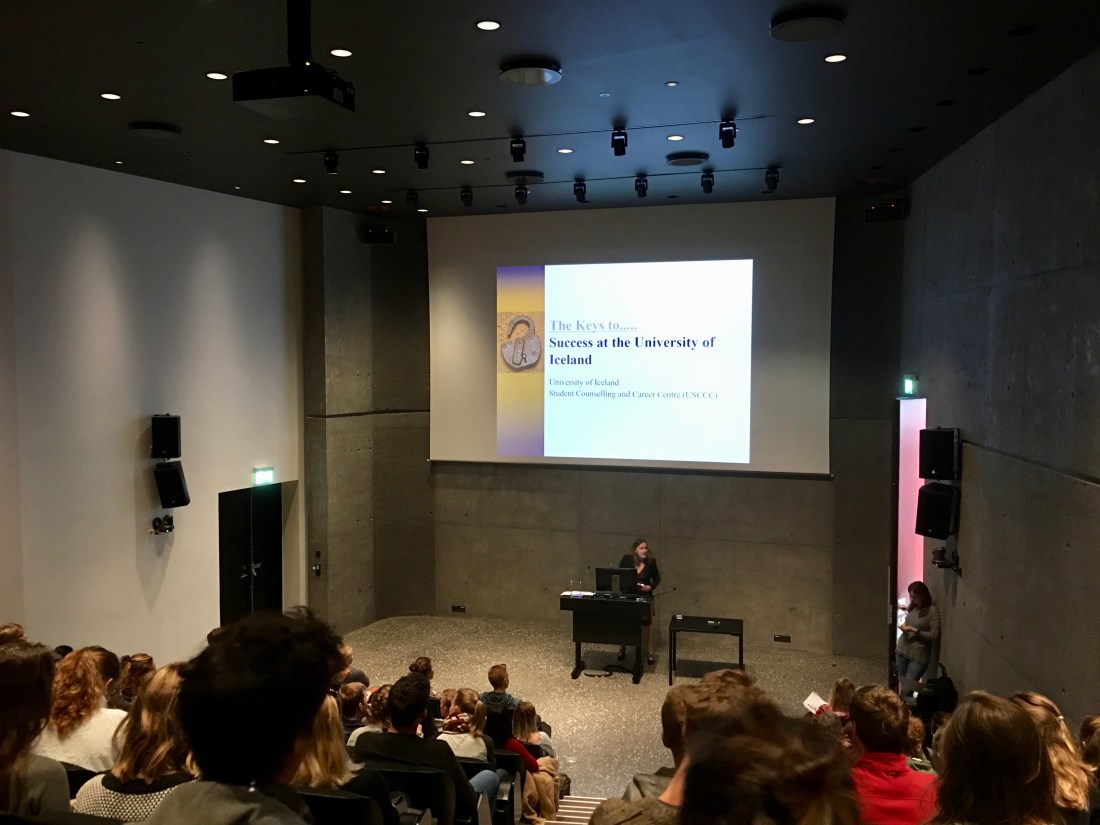
Orientation event “The Keys to Success at the University of Iceland”.
I was especially impressed by the warmth radiated by the head of the program, Professor Jón Karl Helgason (“Jón Karl, Helgi’s son”). He spoke softly and with a glint of humor, starting his introductory talk with a photo of his newborn son. He told us this was going to be our competition for the coming year — he expects us to match or exceed the progress of the young one.
This warmth is something I have rarely felt in the presence of Finnish teachers, but in Iceland it is not uncommon. Many Icelanders know how to bring warmth to a whole room, as Jón Karl did. It made the place feel welcoming and supremely safe. Whereas in Finland, in my experience, it is more common for rooms to have a constant low-level tension. It makes a huge difference.
But I don’t mean to put down Finns, who can have fine qualities of their own. And I have been fortunate enough to have studied under several exceptional ones.
The menu at the student canteen Háma (“Gobble”) on my first day.
During a break I found my way to the canteen, where I ate healthily: vegetable balls in curry pineapple sauce with pasta and salad, with a vitamin drink.
First meal at my new “home away from home”.
Other orientation week activities included a guided tour of the campus, hotdogs and soda in the open air, and of course a student party at the on-campus Stúdentakjallarinn (“The Student Cellar”) — with free bjór (beer).
As we were told during a later visit to the Settlement Museum, beer has long been important in Iceland. In the old days, no feast would have been possible without it, and feasts were very important community-strengthening events.
Landsbókasafn Íslands — Háskólabókasafn (“National Library of Iceland — University Library”) is the largest library in Iceland, with over a million items, including valuable manuscripts. So valuable that the library is surrounded by an actual moat. The building took 16 years to finish and opened in 1994.
I headed home in the evening to my apartment in Kópavogur (“Seal Pup Bay”), feeling it had been a good start.
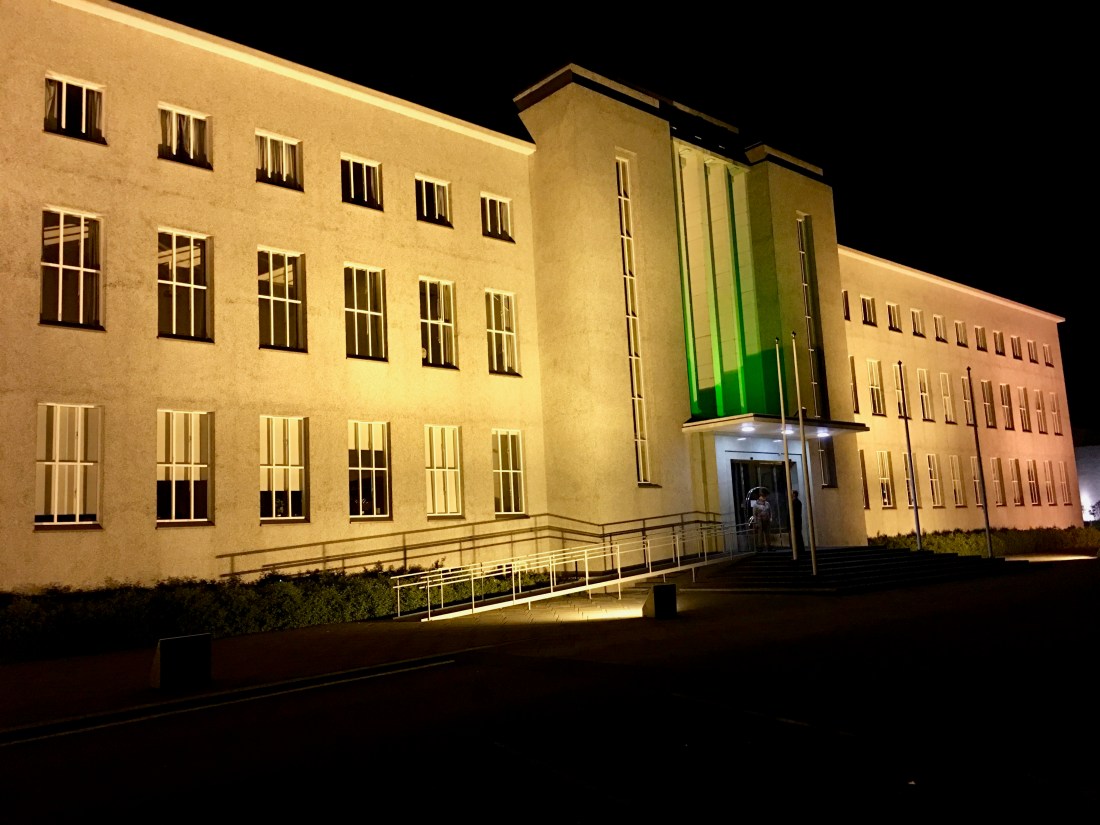
Aðalbygging (“Main Building”) at night. University of Iceland, late August 2018.
I would soon be moving much closer to the university, however. But that’s a different story.
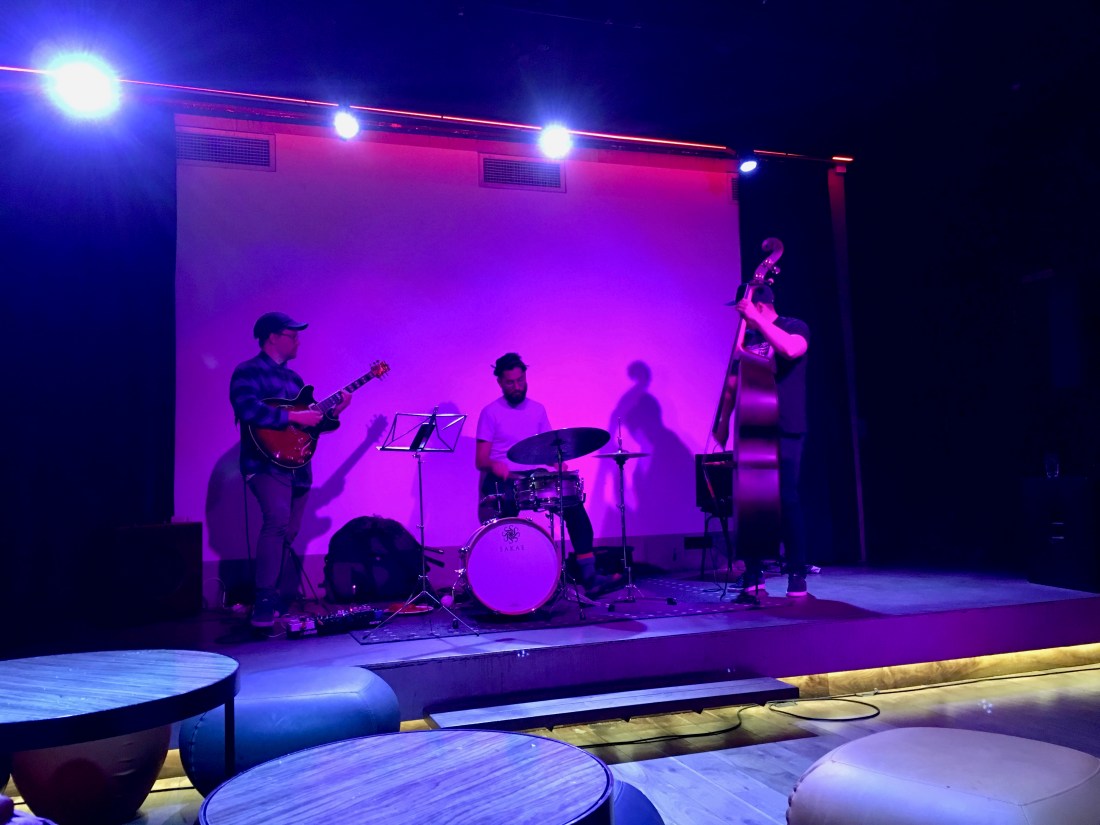
A cool jazz trio jammed at Stúdentakjallarinn at the close of the first orientation day.
SEPTEMBER 14th 2018 — Our minds work in mysterious ways. Why are we sometimes suddenly reminded of something long in the past, with no obvious trigger for that particular memory? Things just find their own time to happen.
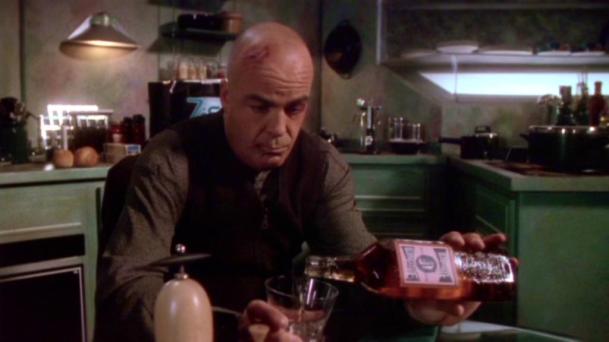
Today for some reason I was reminded of Garibaldi’s alcoholism storyline in BABYLON 5. The actor who portrayed him, Jerry Doyle, passed away in 2016 at the age of 60.
Along with those of G’Kar (the wonderful Andreas Katsulas) and Londo (the equally wonderful Peter Jurasik), his was one of my favorite storylines in this series that for many these days seems to have fallen between the cracks between the latter-day STAR TREKs and Ron Moore’s reimagined BATTLESTAR GALACTICA, which went darker than any popular TV SF series ever.
I just think there was particularly much truthfulness and emotional resonance to Garibaldi’s story, including the story thread of his struggles with alcohol. It was introduced in the first-season episode “Survivors” — still one of the early episodes I remember liking best — and came to play a bigger part later on.
I let my complete VHS collection go many years ago and haven’t repurchased the series since, as I rewatched all of it so many times in my earlier years that I still remember most of it nearly photographically.
From “Survivors”, for example, Garibaldi’s sad, regretful, softly spoken lines about how, long in the past, after a tragic event he crawled inside a bottle and didn’t come out for a long time.
I guess characters with regrets, and the numerous ways they cope or fail to cope with them, will be around, and relatable, as long as we human beings continue to fail so spectacularly and so often at being kind to one another.
Googling some of this today, I also noticed something interesting. In a much later episode, he sings “SHOW ME THE WAY TO GO HOME”, which became one of my favorite songs long after BABYLON 5 — so I didn’t remember it had featured on the show. (More of the interesting workings of our minds.)
Specifically, I came to feel very fondly about this song after a friend posted a few years ago that scene from JAWS with the main characters singing it, badly (that’s why it’s so good), in the little boat at night. I’ve since gone back to watch it again a few times.
One of those rare songs that can bring you up when you really need it.
Audio Damage’s Discord4 pitch-shifting delay for iOS. This company was founded in the United States in 2002.
SEPTEMBER 13th 2018 — Today I continued several long-running threads in my life:
First, learning to use more music-making apps, in this case Audio Damage’s pitch-shifting delay Discord4.
This allows for creating various effects for which I have no immediate use — but I am proceeding methodically to build a strong and wide foundation in all areas of music-making. It is good to have skills to draw upon when the need arises. This one relates for me most to the end stage of putting flourishes on otherwise pretty finished pieces.
Second, building my personal rhythmic vocabulary. In Paris last winter, I started implementing this idea when I found a notebook perfect for this purpose. Rather than horizontal or horizontal and vertical lines, its pages are marked with matrices of small crosses.
This little book from Paris holds my catalogued rhythmic vocabulary so far. After noting down each new rhythmic pattern with simple Xes over the cross matrices on the pages, I transfer each pattern to three solid favorite music-making apps. I’ll be able to draw upon this treasury of inspiration and material for the rest of my life.
I had long been pondering this notion of starting to create a personal catalogue of rhythms, because I had come to realize that this is a key to much greater musical productivity in the future.
I derive these rhythms from melodies and harmonies of music as well as strictly percussive music and personal inspirations. And these rhythms can be used not only for percussive but also melodic and harmonic ends in creating new pieces.
As for the notebook, it didn’t hurt that its cover is themed in pink Tiki symbology. That made me smile. Tiki paraphernalia, so linked with 50s Americana of a certain kind, holds for me a quaint, carefree charm.
As for the figure mentioned in the title of this post, I learned yesterday that our little dark adventure game SERENA (for which I was one of the writers) has now been downloaded 1,684,328 times on Steam.
More than 1.6 million downloads.
It is quite mind-boggling. Over 1.6 million souls all over the world have for a myriad reasons downloaded and experienced our game. We all poured our best work possible at that time into this game — I remember the exactly two months it took us to make it from conception to release as an extremely fertile, productive, inspired time — but it is safe to say this popularity has exceeded all our expectations. It seems to have struck a chord in the hearts of many.
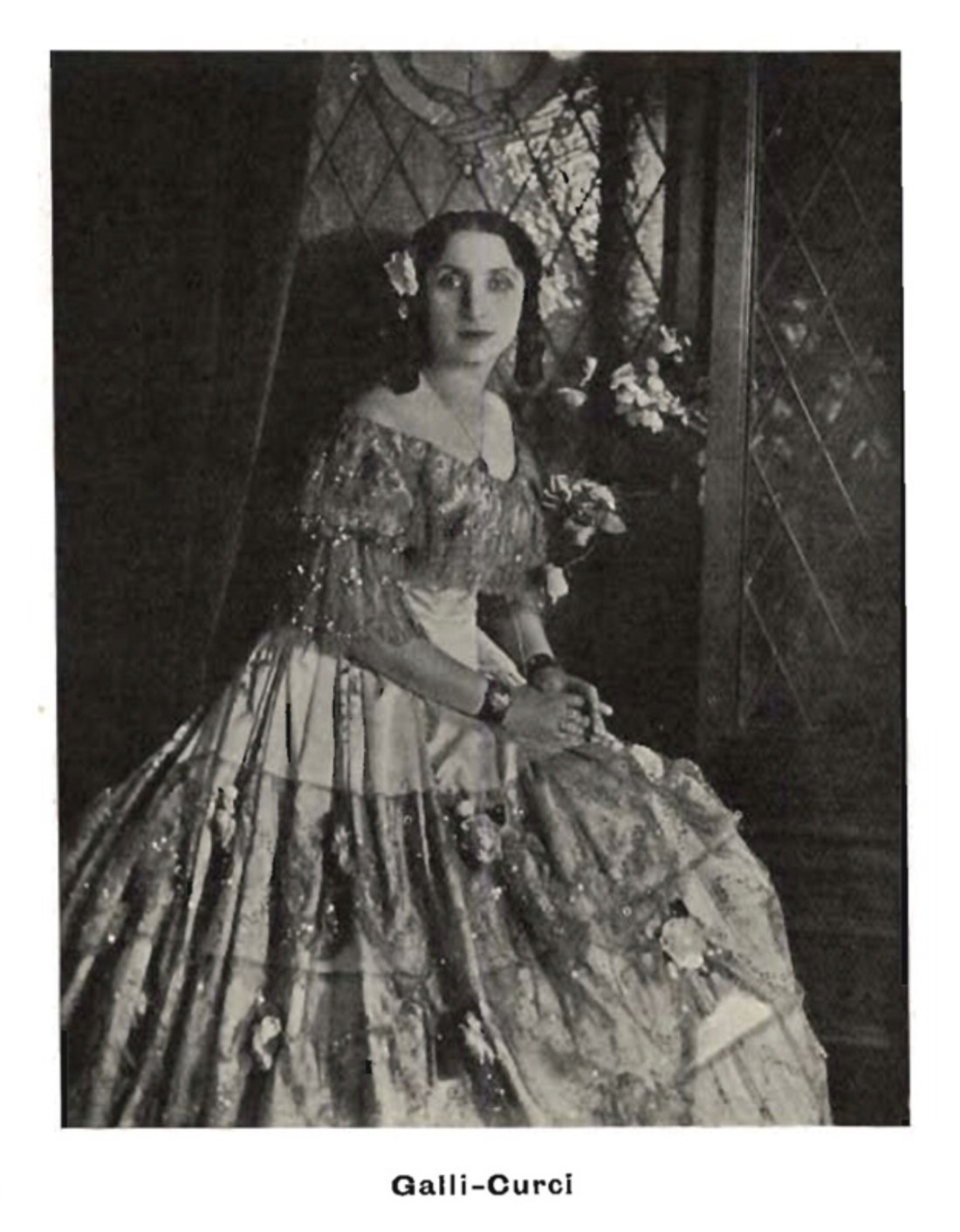
Amelita Galli-Curci, one of the most popular sopranos of her day. “Gramophone Celebrities — I. Galli-Curci”, THE GRAMOPHONE No. 2, Jun. 1923.
SEPTEMBER 12th 2018 — It would be a challenge to find something in today’s issues of THE GRAMOPHONE to make one choke upon one’s breakfast cereal, but these classic issues suffer from no such handicap. Among the morsels from the second issue:
“[…] it is no use asking canaries to sing music written for elephants.” (“Z.” discussing Wagner operas)
Musically, the following recordings mentioned and available on Spotify stand out:
Bach: AIR FOR G STRING played by cellist Pablo Casals. Specifically a recording made by the pre-electric acoustic process between 1916 and 1920. Casals later re-recorded this electrically.
Sebastián Iradier: “LA PALOMA” (“THE DOVE”) (1850s), sung by Spanish-American baritone Emilio de Gogorza. This rendition of this popular song will be mentioned numerous times in issues to come, but with this as well as most other pieces, I will note only the first mention I come across.
Albert Ketèlbey: “BLOW, BLOW, THOU WINTER WIND” (based on Shakespeare) sung by Norman Allin. This is not among my favorite works from this composer, but I wanted to mention it because Ketèlbey is a composer who intrigues me. His music is cinematic, like soundtrack music of several decades later. I will note his other, more alluring works in installments to come.
Two spirituals sung by Roland Hayes: “STEAL AWAY” (arranged by Lawrence Brown) and “GO DOWN, MOSES” (arr. Harry Burleigh). I find that some of these early recordings of spirituals still communicate powerfully and directly across all these years. Compared to that directness of emotion and composition, most “white” music from this era seems feeble and insincere. One doesn’t need to be devotedly religious to appreciate these qualities. This music inspired and its power flowed into the works of Bob Dylan and many other later composers and musicians.
A Swiss musician called Edmond Roethlisberger is quoted on Bach’s harpsichord music:
“Would you know Bach at his most intimate, his most original, it is in his harpsichord compositions that he is to be found… He wrote for it from his earliest youth until his death and confided to it many of those almost supernatural inspirations which hypnotize us as if messages from a Beyond to which he alone could penetrate.” (pp. 36–37)
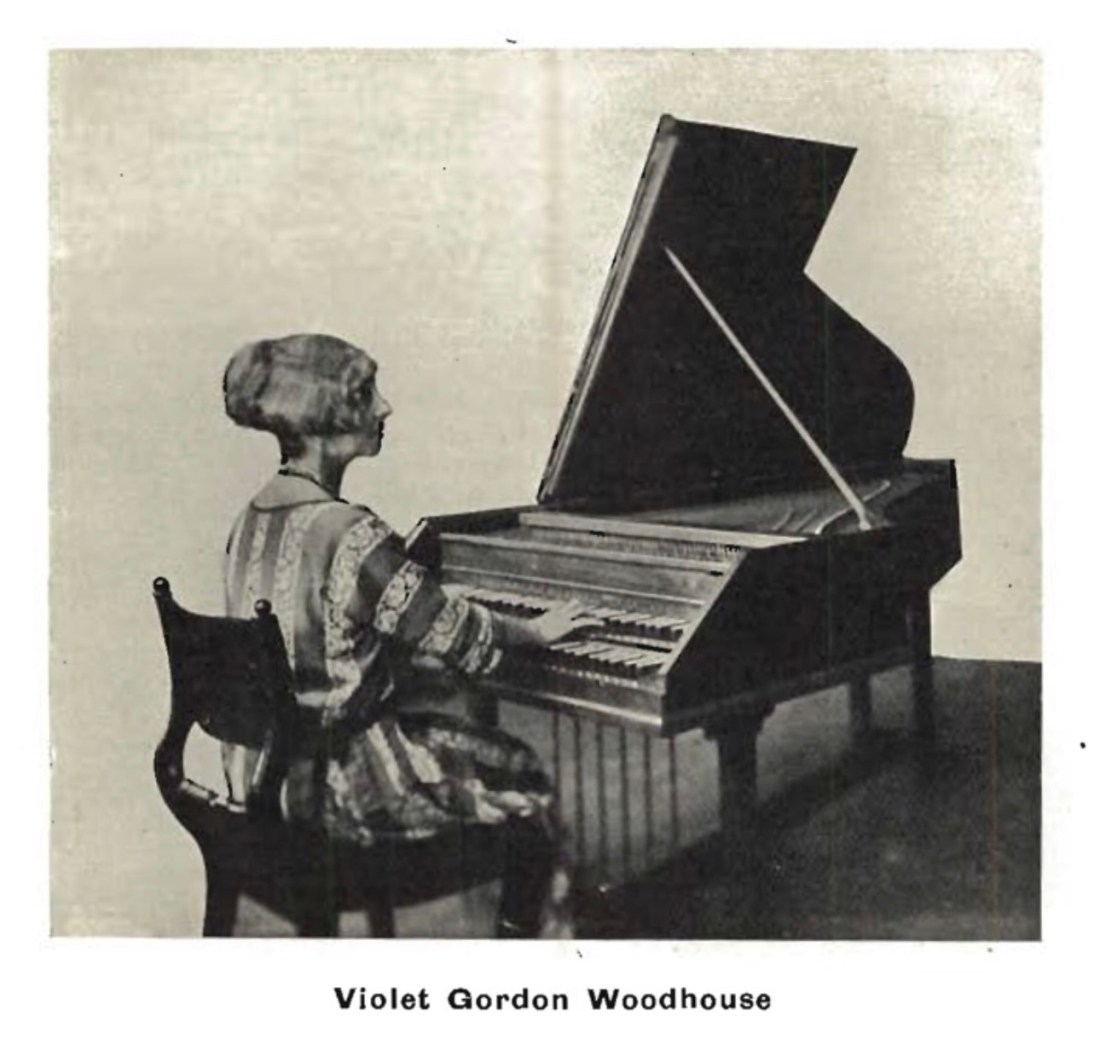
Portrait of the author from the article “The Harpsichord and Gramophone”.
The author of the article in which this quote appears, harpsichordist Violet Gordon-Woodhouse makes an interesting observation:
“It must […] be remembered that in Bach’s and Mozart’s time the harpsichord always figured in the orchestra. Conductors used it much more than the baton. Its quality of tone enabled it to accompany without smothering the principal instruments and blend with the strings as no piano can.”
In another article another writer muses on the proper times and situations for a Brit to listen to the gramophone:
“Again, to show how ridiculous our inhibitions are, let me ask what you would say if, on visiting a lady or gentleman, you found her or him solitary, listening to the music of his own gramophone. You would think it odd, would you not? You would endeavor to dissemble your surprise; you would look twice to see whether some other person were not hidden in some corner of the room, and if you found no such one, would painfully blush, as if you had discovered your friend sniffing cocaine, emptying a bottle of whisky, or plaiting straws in his hair.” (Orlo Williams, “Times and Seasons”, p. 38)
An anonymous writer starts an article on “New Dance Records” thus:
“It was, I believe, a late Shah of Persia, who, when taken to the opera in order that he might be impressed by Western music, expressed preference for the ‘tuning up’ of the orchestra, and desired that it might be repeated.” (p. 40)
The article also tells us that the popular music of the day (1923) was already occasionally quoting classical music.
Spotify playlist for this entry, “Let’s read THE GRAMOPHONE in Iceland: No. 2 — June 1923”:
This issue is available as part of the magazine’s digital archive, which every subscriber (a month or a year, digital or print+digital) gets access to.
1st page of the 1st issue of THE GRAMOPHONE (now over a thousand issues young), Apr. 1923. From the digital archive.
SEPTEMBER 9th 2018 — This entry inaugurates a tradition I plan to follow in the future:
The following of a number of threads like this, with the intention to see where they lead and what light they throw upon my special interests in life. This is far from the only “Let’s” series I have in mind.
THE GRAMOPHONE magazine was founded in Great Britain in 1923 by Compton Mackenzie, novelist, critic, actor, and gardener, along with London editor Christopher Stone. For many decades it covered all music released on record, unlike today, when it is solely dedicated to classical music.
This earlier orientation means it is quite a comprehensive bible to music of all genres released in those several decades. Combined with Spotify, it makes for a wonderful resource and guide into the music of times past.
Let’s see where the first issue takes us. You can find all these back issues as part of the digital archive available at least on iOS and other platforms as well. As a dedicated Apple user these days, I do most things in iOS.
A word of caution, however: I will be commenting only upon pieces of music that interest me at the particular time that I write my entries. There is a lot of more than worthy music that I will pass by. I just want to comment on some.
* * *
The time is April 1923.
One thing that these classic issues have to offer is a use of English now largely lost. While there are attitudes that will justly strike a modern reader as awful and harsh, there are also graces and subtleties that no modern publication can offer. The use of language is often rich and luxurious.
Of all the recordings mentioned in this issue, it would be hard not to place at the top the one by violinists Kreisler and Zimbalist of Bach’s CONCERTO FOR TWO VIOLINS. This can be found on Spotify in three parts: I. VIVACE. II. LARGO. III. ALLEGRO. This is music with a guilelessness perhaps almost wholly unfamiliar to most modern musicmakers.
Chopin’s NOCTURNE NO. 19 IN E MINOR, Op. 72 No. 1, played by pianist Benno Moiseiwitsch, is referenced. This wonderful piece is also available on Spotify.
Let’s learn some music theory:
E minor means that the piece is in the key of E minor. That means it follows the modern minor scale, which works like this (every half step is a step towards the next key on the piano keyboard, whether a black or white key, and every whole step is two steps on the piano keyboard, whether black or white keys):
Starting from the root note, in this case E, it follows this pattern ascending up the scale:
E, whole step (F#), half step (G), whole step (A), whole step (B), half step (C), whole step (D), whole step (E), arriving at another E.
Every minor scale in modern music follows this same pattern of whole and half steps.
So the only difference between modern minor scales is which root note they start from. The relationship between the notes of the scale is exactly the same in all minor scales. The same is true of all major scales, but I will come to that later.
In this way you can construct any modern minor scale in any key. You simply pick the root note (any white or black key on the piano or other similar keyboard) and follow this pattern of steps:
root W H W W H W W
You can also start on any of the black keys, and sharps and flats are added to the basic note names as needed.
A sharp is simply the next note above, whether a black or white key, from the default form of the note, and a flat is simply the next note below, again whether a black or white key.
Thus C# or C sharp is the black key between C and D, and Cb or C flat is the white note below C — in other words, B. Pairs like Cb and B, which actually refer to the selfsame note, are called enharmonic notes.
But enough theory for now. To conclude, the Chopin NOCTURNE IN E MINOR is called that because it takes E as its root and fundamental note and is in the minor key, so it uses primarily the seven notes of the E minor scale (or eight if you count the E above also).
Few of the early Wagner records mentioned in these early issues are on Spotify. Perhaps needless to say, Wagner dipped for his RING cycle into the well of myths first or only written down in Iceland — the Eddic sagas.
But though these are not on Spotify, I want to cite here the titles — evocative on their own — given for some Wagner recordings in this issue. In the following, Wotan = Óðinn / Odin.
DAS RHEINGOLD (THE RHINEGOLD)
“Alberich steals the gold: The dawn over Valhalla”
“The descent to Nibelheim: Capture of Alberich”
“The entry of the gods into Valhalla”
DIE WALKÜRE (THE VALKYRIE)
“Prelude: Siegmund seeks shelter from the storm (Act I)”
“Siegmund sees the sword hilt in the tree”
“Siegmund greets the spring night”
“Siegmund draws out his sword”
“Introduction: Brünnhilde’s battle cry”
“Wotan warns Brünnhilde not to disobey”
“Brünnhilde foretells Siegmund’s death”
“Introduction: Ride of the Valkyries”
“Brünnhilde gives Sieglinde the broken sword”
“Brünnhilde implores the protection of fire”
“Wotan bids farewell to Brünnhilde”
“Wotan kisses Brünnhilde into a deep slumber”
“The rock is surrounded by fire: Finale of opera”
Still on the subject of Iceland:
“A Review of the First Quarter of 1923” by the Editor mentions “THE SONG OF THE VIKING GUEST” sung by Russian bass Feodor Chaliapin (p. 16). This early cylinder recording is available on Spotify. The song is from Nikolai Rimsky-Korsakov’s opera SADKO (premiered in Moscow in 1898).
The Zonophone ad in this issue (p. VI) lists singer Foster Richardson, with orchestra, performing Samuel Coleridge-Taylor’s “THE VIKING SONG”. This, however, is not on Spotify.
Also mentioned in this Zonophone ad, as well as in the Editor’s review of the first quarter (p. 16), is the lovely Elizabethan song, “DRINK TO ME ONLY WITH THINE EYES”, recorded for example by Johnny Cash in much later days.
Spotify playlist for this entry, “Let’s read THE GRAMOPHONE in Iceland: No. 1 — April 1923”:
This issue is available as part of the magazine’s digital archive, which every subscriber (a month or a year, digital or print+digital) gets access to.









 Beauty, Poetry, & Music