
Let’s read THE GRAMOPHONE in Iceland: No. 5 — October 1923
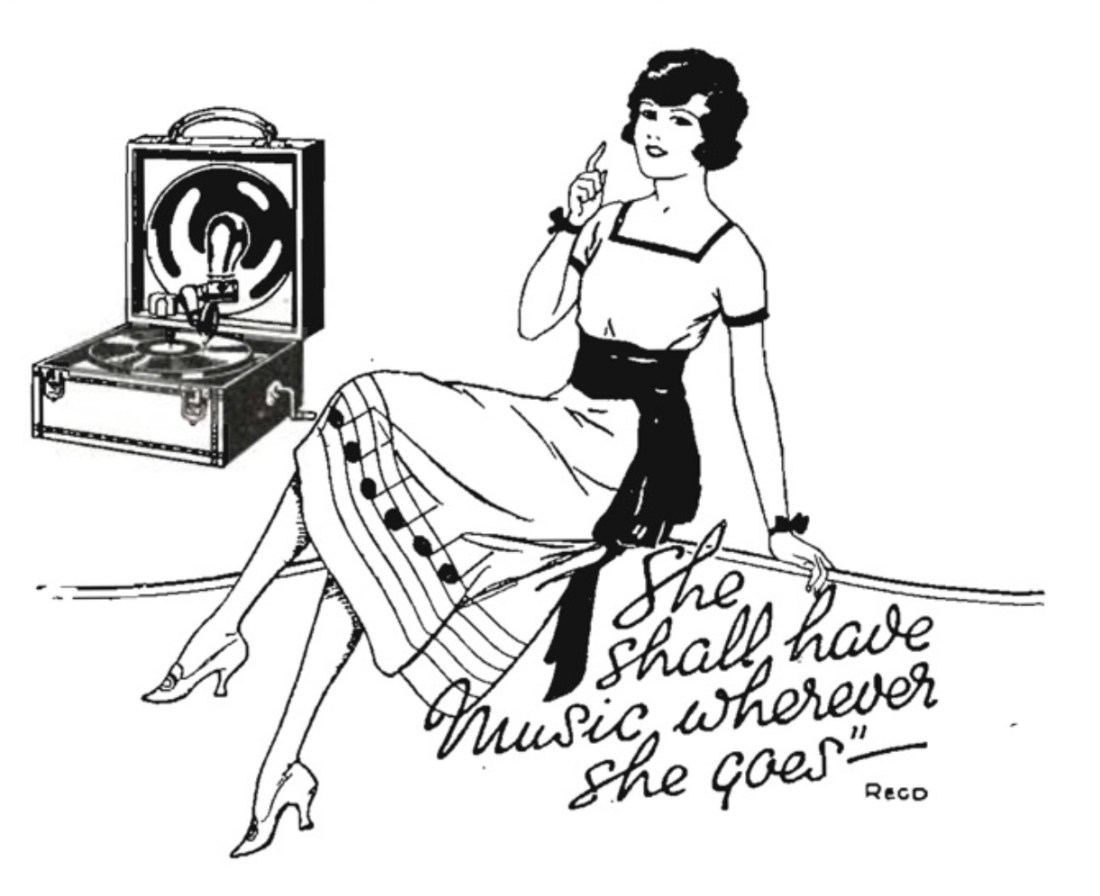
NOVEMBER 19th 2018 — A report from one of the London gramophone societies discusses Italian composer Pietro Mascagni’s 1890 opera CAVALLERIA RUSTICANA (“RUSTIC CHIVALRY“). The writer comments:
“[…] probably the most original point is the INTERMEZZO — which even the errand boys know — played while the curtain remains up and the stage is empty. It is a refreshing lull between the various passionate episodes of the drama.”
This INTERMEZZO is one of those pieces I listen to every available recording of mentioned in the pages of THE GRAMOPHONE. I believe I first heard it in two episodes of NORTHERN EXPOSURE: 3.23 “Cicely” (1992) and 5.22 “GRAND PRIX” (1994).
In the former, it accompanies a beautiful dance by town co-founder Cicely, and in the latter it plays as Ed Chigliak physically fights “the demon of external validation”. But no recording available is mentioned in this report, so no playlist item of this for now.
An article about a visit to a record-pressing factory of His Master’s Voice (HMV) mentions in passing a musician who was to die at the age of 35 later this decade (the 1920s) after a short illness:
“We saw the whole process of record-making. We heard an orchestra, with Max Darewski at the piano, in the recording room, and heard the piece instantly returned from the wax.”
I also mentioned him in the previous entry in this series in connection with a ragtime piece of his.
Also interesting to note the word “robots” already being used in this 1923 article (“automatic machines which worked like Robots at the making of screws, etc.”), considering that this word was coined only three years earlier, in 1920.
The review pages quote Debussy’s delightful comment on Grieg (many of Grieg’s pieces are among my favorites):
“Grieg is like a pink bon-bon stuffed with snow.”
I’m not sure whether Debussy meant this as a slight or not, really, but to me it’s quite charming and creates a vivid sensory impression. Also, like most northern kids, I’ve eaten snow more than once in my life — just for the taste or because thirsty when playing outside as a kid.
This issue was short of any references to recordings that hold special appeal for me. But rather than skip the Spotify playlist for this entry altogether, these would be my choices from an unexciting selection this time:
- Two takes of the same Chopin piece by pianist Benno Moiseiwitsch: IMPROMPTU NO. 2 IN F SHARP MAJOR, Op. 36 No. 2. The difference in tempi makes one of the takes ten seconds shorter than the other.
- Tenor Roland Hayes singing the American spiritual “SIT DOWN”.
Spotify playlist for this entry, “Let’s read THE GRAMOPHONE in Iceland: No. 5 — October 1923”:
This issue is available as part of the magazine’s digital archive, which every subscriber (a month or a year, digital or print+digital) gets access to.
Earlier entries in this series:
Let’s read THE GRAMOPHONE in Iceland: No. 4 — September 1923
Let’s read THE GRAMOPHONE in Iceland: No. 3 — August 1923
Music: Phase 2
OCTOBER 28th 2018 — In Paris I started a personal catalogue of rhythmic patterns to help me with my music-making. I just now strung them all together one after the other, and so far there are 6,762 bars (measures) of patterns and variations. I add to it daily.
This has been all about laying a solid foundation and has involved hours and hours of painstaking, methodical work.
I have every pattern: 1) on paper, in a notebook I bought in Paris, 2) on my iPad Pro, which is my main creative multipurpose tool, in four separate apps (if anyone is interested: Notion, DrumPerfect Pro, Patterning, and Cubasis 2), and 3) in cloud storage. So it would take quite the calamity for me to lose them.
But yes, I decided the foundation is now solid enough and now I can start really building with this resource to draw on. I have been doing that all along in tandem with this, but I mean even more actively.
Now comes melody, instrumentation, and all the really fun stuff.
Of photos & memories
OCTOBER 24th 2018 — Nearly everyone must know the feeling. Coming across and looking through photos that trigger waves of memories, remembering what it was all like. People we miss… memories of happy times… good moments.
In lonelier times this feeling can be overwhelming. There may be tears. And we may remember with infinite regret things we didn’t do as well as we should have. Perhaps causing that happiness to flee. If we had done things differently, we might still be happy and those times may never have fled.
Did I say there may be tears? Of course there are. All the above being true, of course there are.
Music in the air
OCTOBER 23rd 2018 — All the entries in my “Let’s read THE GRAMOPHONE in Iceland” series now come with playlists of all the recordings mentioned and available on Spotify.
As this series progresses, the variety of music will grow ever wider, since my interests in music extend to all types of music and since for decades THE GRAMOPHONE covered all types of music, not only classical, as today.
The quality of recordings will also soon improve radically, since the late 1920s marked the switchover from the much less advanced (and so-called-then) acoustic process to the (again so-called-then) electric process of recording.
From my rudimentary reading on this topic, this basically meant that microphones started being used for recording. Up until that time, music was recorded by singing and/or playing into a kind of tube.
Here are links to the entries so far:
The issues covered in this “Let’s read” series are available as part of the magazine’s digital archive, which every subscriber (a month or a year, digital or print+digital) gets access to.
Let’s read THE GRAMOPHONE in Iceland: No. 4 — September 1923

OCTOBER 19th 2018 — Starting with this entry of this “Let’s read” series, I have decided to share Spotify playlists of the pieces I pick out from each issue for special mention. These have also been added to the previous entries.
Editor Compton Mackenzie opens the issue by presenting the idea of what would later be named the National Gramophonic Society. Here he is only asking his readers whether they would support the venture enough for it to be worth doing. They would, and the Society would go on to make many worthwhile recordings of music previously unavailable on record.
The editorial is followed by an installment of “A Musical Autobiography”, also by the Editor. He looks back on a time when he was such a short way along the path of musical appreciation that he honestly couldn’t perceive the melody in the opening bars of Tchaikovsky’s SYMPHONY NO. 6 IN B MINOR, even though a friend played it to him over and over, getting more annoyed with each attempt.
Elsewhere in this feature the Editor writes:
“[…] I am always suspicious of perfect taste that has not been reached by leagues of bad taste.” (p. 65)
And:
“For one’s own pleasure I am sure that it is a mistake to have exquisite taste in all the arts. For the rest of my life I intend to be quite impenitent about music and painting, and never to allow myself to get beyond works of art that still delight me, though I know them to be far removed from the first rank.” (p. 65)
And:
“I do not fancy that I shall ever lose my bad taste in music, although I regret to say that I am beginning to find Puccini impossible. This is a sad business, and I grow to like Bach better and better every day.” (p. 66)
About the page numbers: At this point in its history, and for years to come, THE GRAMOPHONE employed page numbering that continued from one issue to another throughout one volume — one year.
Many people would have these volumes bound in handsome hardcover collections, so the result at the end of every volume was essentially a thick book of several hundred pages.
A highly detailed index was also produced for each volume. I have not seen any of these indices myself, as unfortunately they are not part of the magazine’s digital archive. But I should add that the digital archive is searchable — to the extent that the Optical Character Recognition catches each word.
Maybe one day an angel somewhere will drop these indices — not to mention the missing ads from the early years — on the laps of the people maintaining the archive. I hope so.
Recordings of especial interest that are on Spotify:
- Cellist Pablo Casals and pianist Walter Golde play a transcription of Chopin’s NOCTURNE IN E FLAT MAJOR, Op. 9 No. 2. Casals would record this again some years later.
- From pioneering harpsichordist Violet Gordon-Woodhouse (discussed in previous articles in this “Let’s read” series), Domenico Scarlatti’s SONATA IN A MAJOR, K. 113, L. 345 and SONATA IN D MAJOR, K. 29, L. 461. In these early days, recordings of instruments other than the most familiar ones comprising the symphony orchestra — and piano, of course — were rare. I always perk up when I find on Spotify one of these recordings featuring less common instruments.
- Ragtime piano with Max Darewski: “MONKEY BLUES”.
F. Sharp starts her review of dance records with:
“To listen in cold blood to a succession of dance records is fair neither to the records nor to the reviewers. The following have all been danced to, and a dancing expert has given her valuable opinion on their merits.” (p. 79)
And a few paragraphs later she makes the first mention in the pages of THE GRAMOPHONE of the wonderful Cole Porter:
“Talking of syncopation, I cannot find in any catalogue records of Cole Porter’s marvelous syncopated music. I have not any American catalogues by me, but I suppose some recording company has got him on their list. I cannot understand why we are not given anything by this young master of rag-time.” (p. 79)
Spotify playlist for this entry, “Let’s read THE GRAMOPHONE in Iceland: No. 4 — September 1923”:
This issue is available as part of the magazine’s digital archive, which every subscriber (a month or a year, digital or print+digital) gets access to.
Earlier entries in this series:
Let’s read THE GRAMOPHONE in Iceland: No. 3 — August 1923
Theater
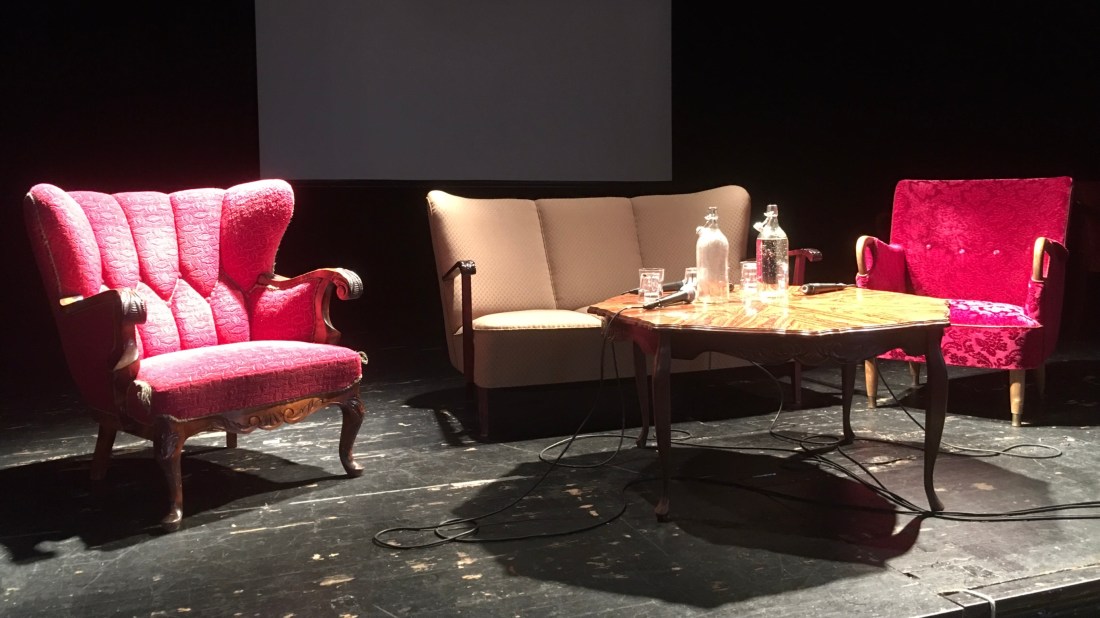
OCTOBER 18th 2018 — The photo is from IceCon 2018, between panel discussions at Culture House Iðnó in Reykjavík (early October), but it made me think of theater.
Theater is special. There is a magic to it. This post is a small tribute to that.
From the heavy curtains to the wonderfully worn, scratched stage floors, to the costumes and props, makeup and music, light and shadow, real people and things in physical space sharing an experience that will always be new, never exactly the same, and of course the amazing, intoxicating smell that many theaters have, theater engages all the senses and involves us as human beings in a beautiful world of art.
I support the idea that parents should let children discover this magic in one way or another at a young age.
Some things in life simply make for warmer and often — not always, but often — more empathetic souls. And theater is one of those things.
A dream of beauty
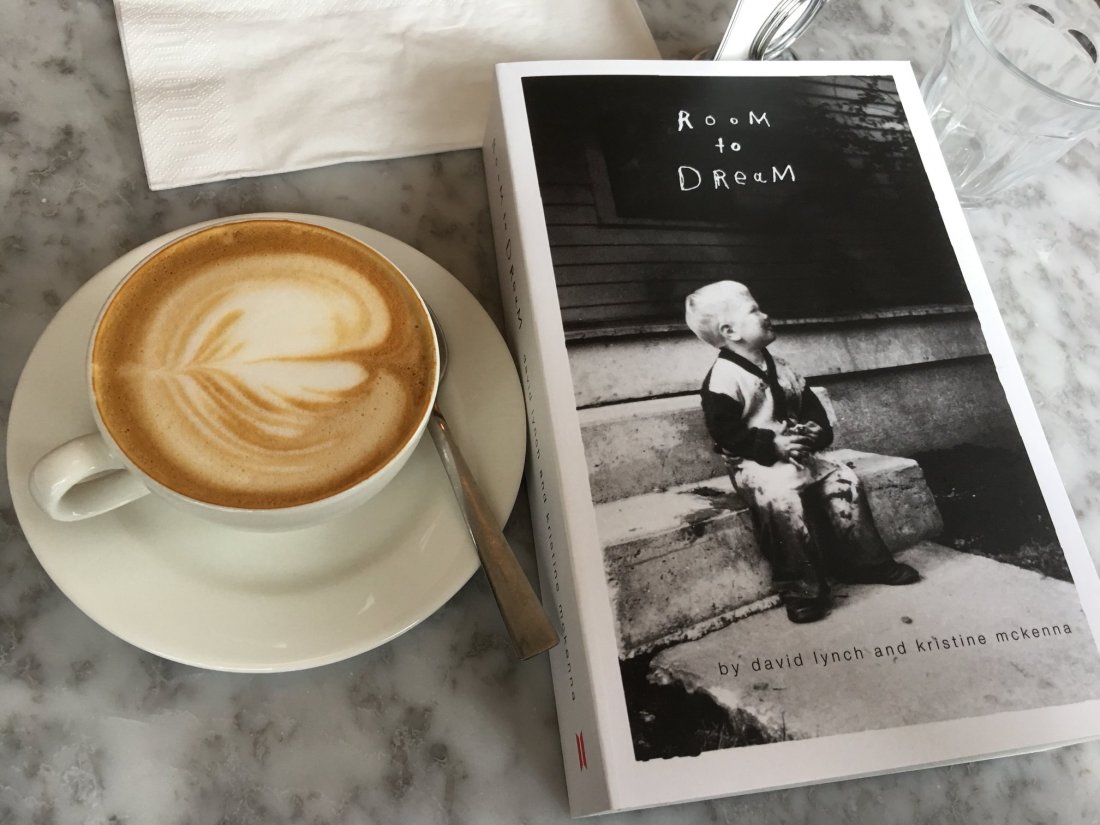
OCTOBER 16th 2018 — I had a lovely dream. Sometimes our subconscious mind, or some other providence, gifts us with moments of beauty in dream no matter how waking life is. The only downside is, of course, waking up.
In the dream I mentioned to someone a wedding of persons who were strangers to her. To my surprise, she got tears in her eyes, even though she did not know the people who got married. The topic of weddings in general could move her so deeply, or maybe there were more specific personal associations for her.
I felt such affection for this sensitive and beautiful soul. She smiled and laughed as the tears kept coming.
As we continued speaking, it came as the most natural thing in the world to lie down on the couch — we were in a living room I have not (at least yet) been to in the waking world — and seek out the other’s hand with our own as we kept talking, both unexpectedly so happy in the special moment that had suddenly happened that it felt like nothing could ever change it.
Talking, sharing, holding hands, looking into each other’s eyes, both warmed by the rich warmth of the other and of that moment, it was like swimming in happiness and the beautiful promise of life.
Chopin, Paris, Bradbury, happiness
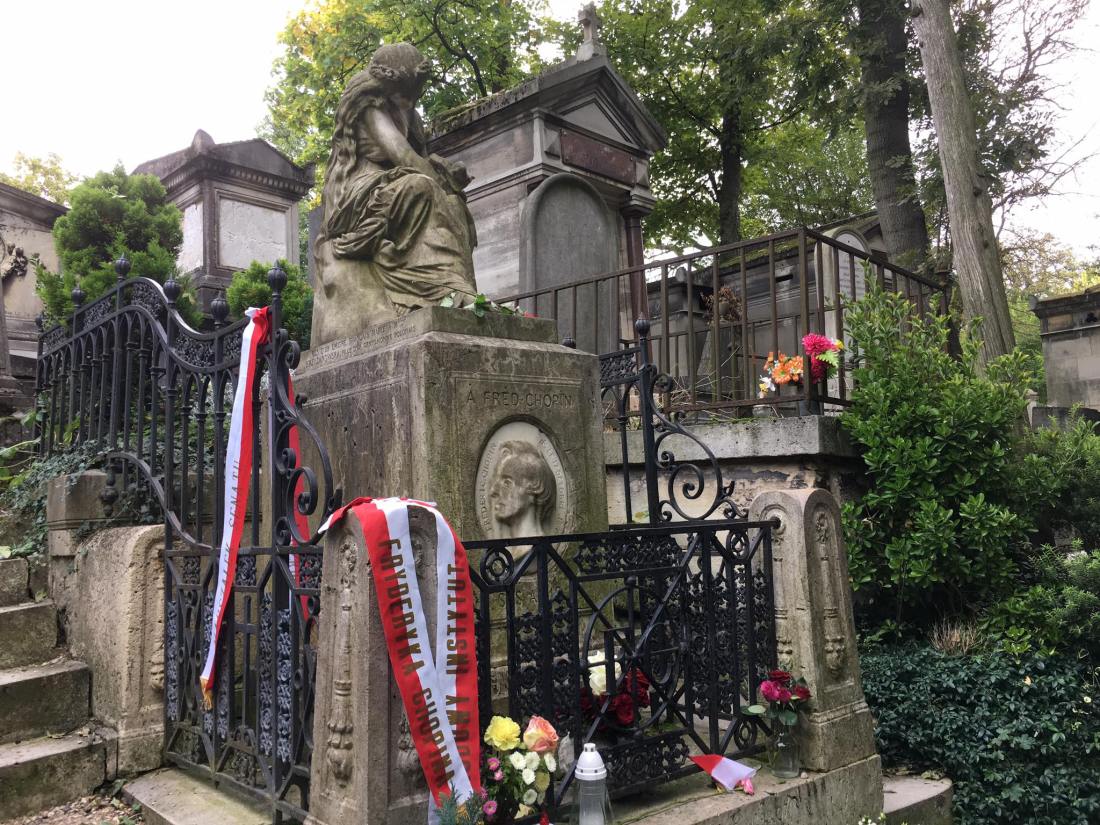
OCTOBER 16th 2018 — I visited Chopin’s tomb at Père Lachaise Cemetery in Paris a bit over a year ago.
And the greatest thing was that there was his music in the air just then, just like in an episode of THE RAY BRADBURY THEATER that had a scene actually filmed there: “On the Orient, North”. Someone was playing it from their phone. I almost couldn’t believe it.
Also wonderful was how the apartment I rented happened to be located literally just down the street from this cemetery (and I mean, Paris is huge), which I always knew I would want to visit. But I didn’t even realize this when arranging for the flat. It was the only one open to me, really.
It was on rue du Chemin-Vert (“Street of the Green Path”). And in Paris I experienced some of the happiest moments of my life. I treasure some of those memories.
These things will apply to everyone I will ever meet
From two or three years ago.
OCTOBER 14th 2018 — Never let anyone compromise your principles.
You are the one who would pay the price of living with that, perhaps for the rest of your life. It’s not worth it, whatever the situation.
And there are people who will appreciate and perhaps even love you precisely for refusing to lie or say false things.
I have decided to do what I can to live up to that ideal of never saying anything to anyone that could not stand as the last thing I said to them, should I rejoin eternity soon after that.
I will never play a single game with another person’s heart. It’s not what we’re here for.
* * *
I will never be one of those people making others feel there is something they need to change about themselves in order to be good enough. In order for me to like them.
Don’t listen to those people. That is a road that will never end.
You will never get lasting validation from them, and even if you did, it would be for all the wrong, manipulative reasons, and would be taken away the next time that person felt peevish — or the smallness of their own heart.
If I or others like you and your company just the way you are, you are already more than good enough, and wonderful.
This life is too precious and fleeting and fragile for anything more closed-minded than this.
 Beauty, Poetry, & Music